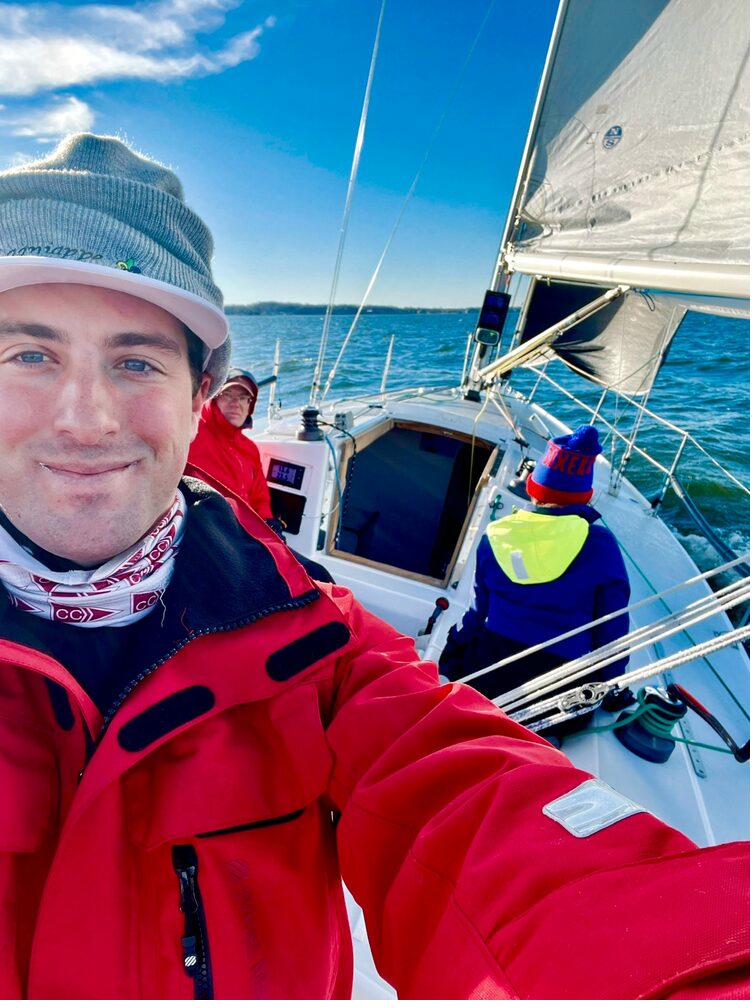
The Bay Froze Over
In late January 2026, a weakened polar vortex pushed a wall of Arctic air south and locked the Chesapeake Bay in ice. Creeks froze solid. Rivers stopped moving. Watermen couldn't work. The DNR sent icebreaking vessels through Kent Narrows just to keep the basins open.
For most people on the Bay, it was a miserable stretch of weather. For a small group of sailors on the Eastern Shore, it was the best week of the year.
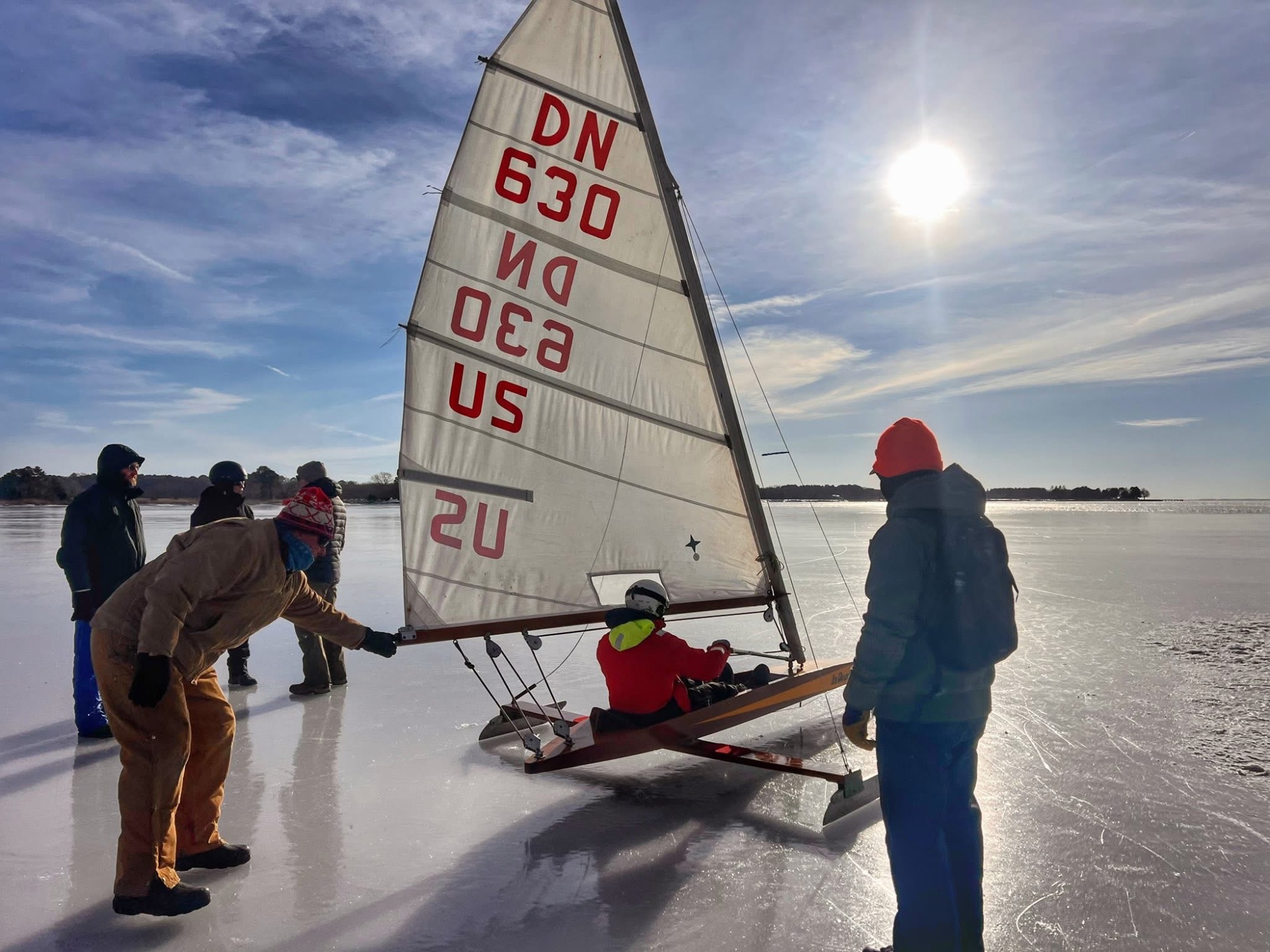
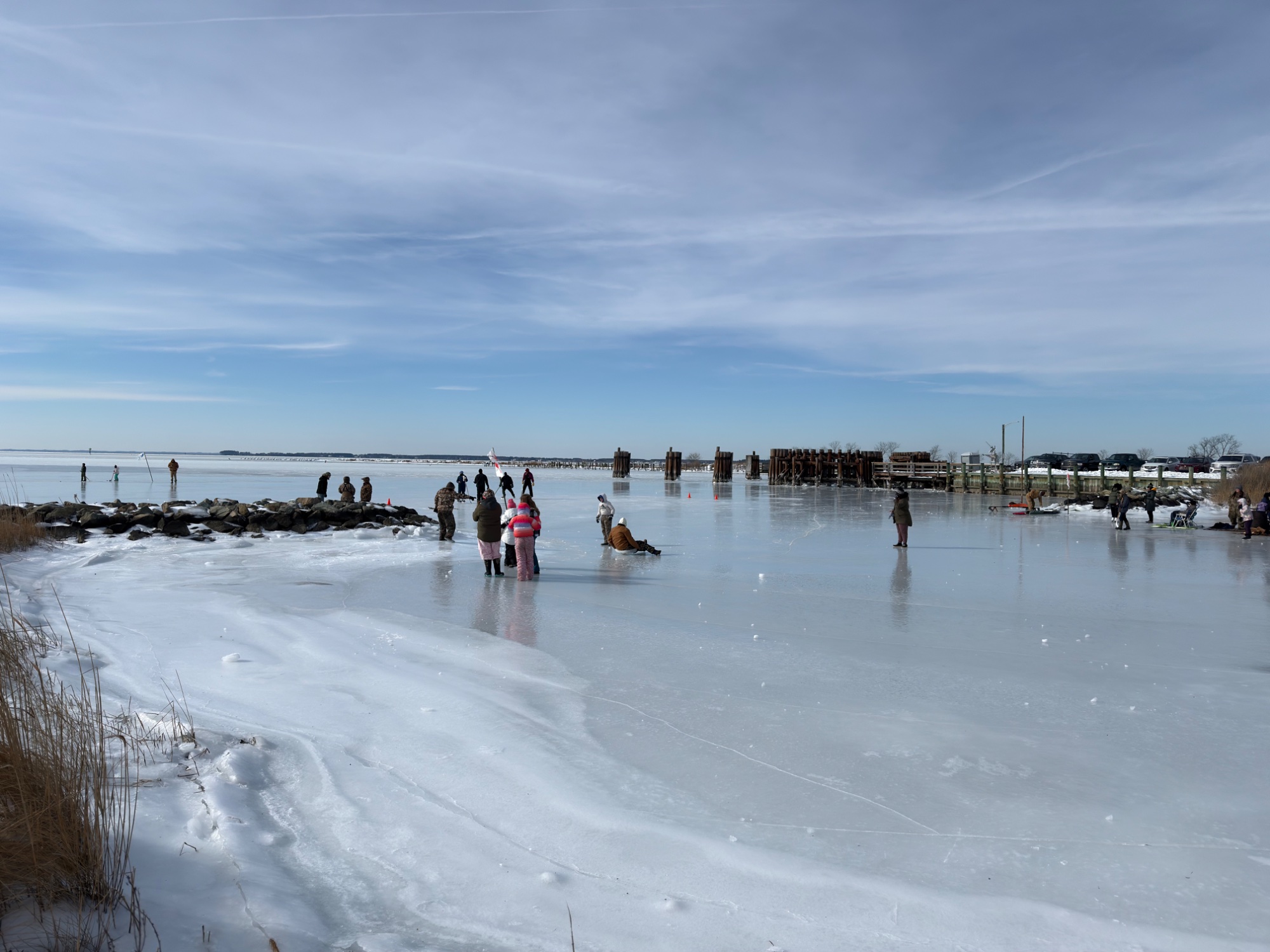
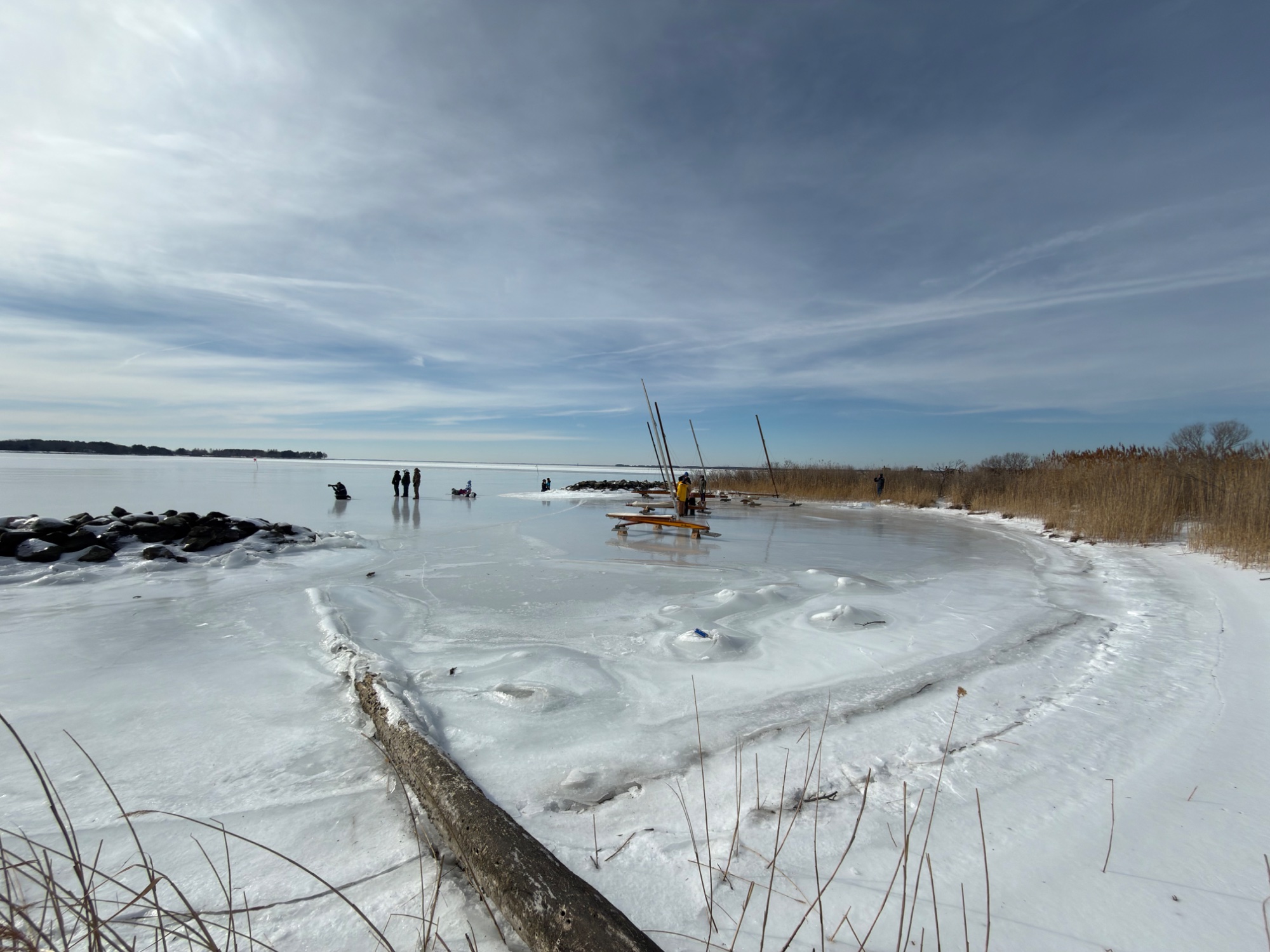
I drove to Claiborne — a tiny landing on the eastern side of the Bay, just south of St. Michaels — on a Saturday morning in early February. The wind was blowing 10 to 15 knots out of the northwest, the sky was crystal clear, and the ice stretched out from the shore as far as I could see. People were already rigging boats on the ice. DN iceboats.
I've sailed everything from dinghies to offshore racers. I deliver boats from Maine to Florida. I run J/105 racing clinics in Annapolis. I've foiled a WASZP. But I'd never sailed on ice. That was about to change.
"Every few years, the Bay turns into a whole new world. For just a few days, the rules of sailing completely change."
What Is a DN Iceboat?
The DN is the most popular iceboat class in the world. The name comes from the Detroit News, which sponsored an iceboat design contest in 1937. The winning design — originally called the "Blue Streak 60" — was meant to be simple enough for anyone to build at home, fast enough to be thrilling, and small enough to transport on a car roof.
Nearly 90 years later, the basic concept hasn't changed much. The boat is about 12 feet long. It weighs around 120 pounds. It carries 60 square feet of sail. It sits on three steel runners — two on a cross-plank at the back, one steering runner at the front. You lie on your back in a wooden fuselage, feet forward toward the steering yoke, with the sheet in one hand and the tiller bar at your feet.
There is no keel. There is no drag from water. The friction between polished steel runners and smooth ice is almost nothing. The result is a boat that routinely sails at two to four times the wind speed. In a 15-knot breeze, you can be doing 45 mph. The DN is the fastest wind-powered surface vehicle on earth that doesn't use an engine.
There are also larger iceboats built for two people. One of the boats out on the ice that day was "Spirit of Oxford" — a two-person iceboat built locally in Oxford, Maryland. That's actually how my day on the ice began.
The 1977 World Championships on the Miles River
Ice boating on the Chesapeake didn't start by accident. It arrived because of one of the coldest winters in recorded history.
In January 1977, the DN North American Championship, followed by the Gold Cup World Championship, was scheduled to be held at Red Bank, New Jersey. But heavy snowfall blanketed the ice there, making it unusable for racing. A veteran iceboat sailor named Homer Sieder had recently moved to St. Michaels, Maryland. He reported something remarkable: clear, smooth ice on the Miles River.
The competition moved south — to the Miles River Yacht Club in St. Michaels — the farthest south the championship has ever been held, before or since.
Sailors arrived from across the continent and beyond — the Midwest, New Jersey, New York, New England, Canada, Germany, Holland, and Poland. Ninety-eight boats registered for the North Americans. The ice was eight to ten inches thick on brackish Chesapeake water.
Three locals scrambled to join the action. Log canoe skippers Vance Strausburg and Jimmy Wilson and St. Michaels dentist John Mautz purchased or borrowed DN iceboats to race. None of them took home the trophy, but something more important happened: the excitement of ice boating took permanent root on the Eastern Shore.
The 1977 winter was extraordinary. Overnight lows stayed below freezing for 58 consecutive nights. Ice closed the Chesapeake and Delaware Canal for the first time since it opened as a sea-level canal fifty years earlier. Barges delivering heating oil were frozen in place. Oystermen cut holes in the ice with chain saws and worked from trucks instead of boats.
The conditions that year weren't without danger. By the first weekend of February, pressure ridges had formed in the ice. At speeds approaching 60 mph in 20-knot winds with gusts to 25, hitting a ridge was catastrophic. About ten of the 98 registered boats were damaged. Capsizes catapulted sailors onto the ice. One competitor broke his nose when his boat dropped into an open-water hole.
But when the championships ended, the boats didn't all leave. A handful of DNs stayed in garages around St. Michaels and Talbot County, waiting for the next deep freeze. They've come out every time the ice has been thick enough since: 2007 in Claiborne Cove, 2015 on the Miles River (where two boats went through holes and had to be recovered the next day), 2018, 2025, and now again in 2026.
What It Actually Feels Like
I've sailed a lot of boats. I run J/105 clinics on the Chesapeake. I've delivered yachts from Maine to Florida. I've foiled a WASZP. But nothing prepared me for what ice boating feels like.
My day started as a passenger. The Spirit of Oxford — a two-person iceboat built locally in Oxford, Maryland — was out on the ice, and after watching another boat slide out and hit the jetties, I was honestly a little scared. But they offered me a ride with a very experienced driver, and I couldn't say no.
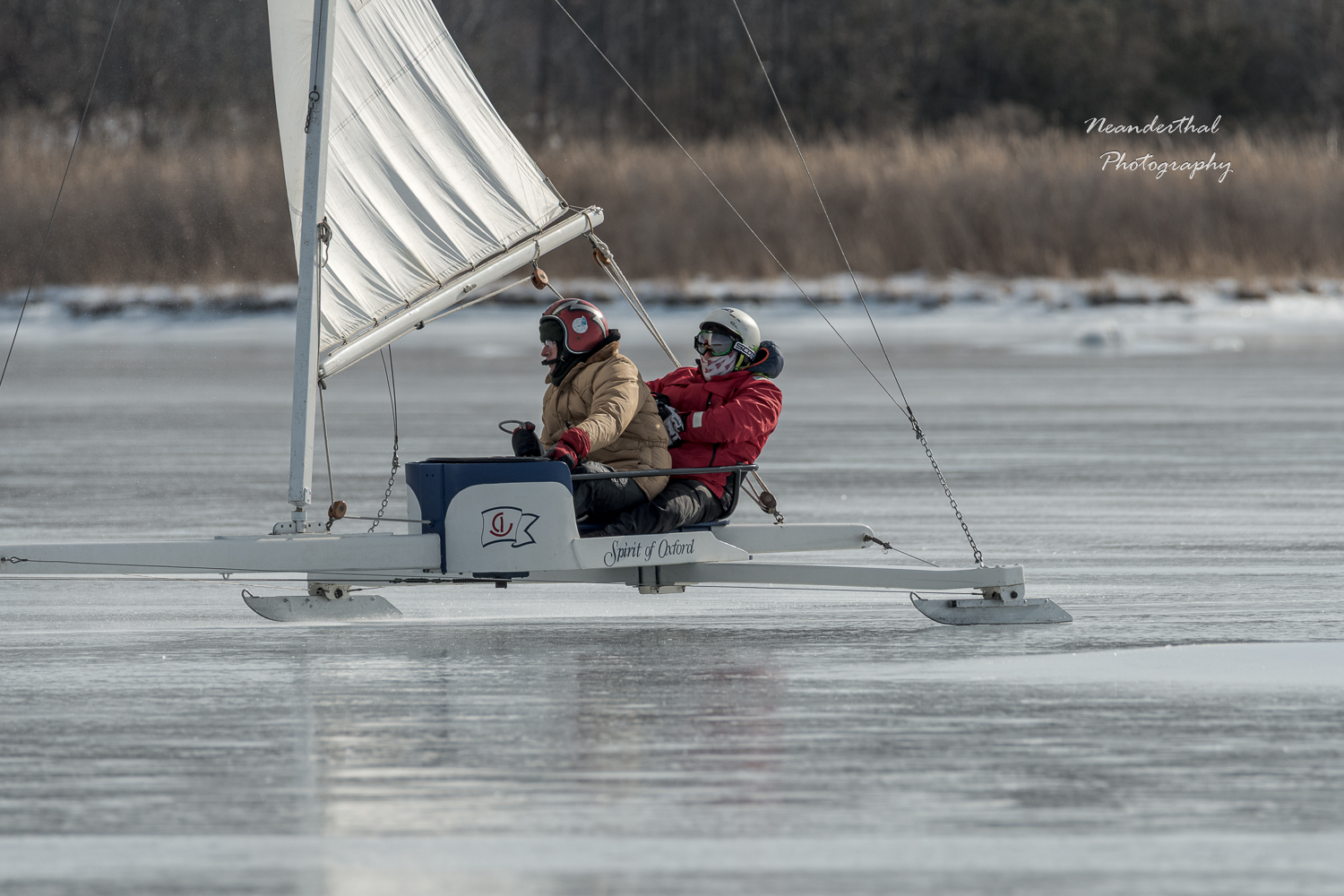
I was instantly smiling. It was really cool. When I got back to shore, Ice Dancer was rigged and ready. They asked if I wanted to take it for a ride solo. How could I say no?
I got out there and instantly loved it. I was also terrified.
You lie down in the fuselage. Flat on your back. Helmet on. Your feet stretch forward to the steering yoke — a bar connected to the front runner. The sheet is in your right hand. The sail is right above you, close enough to touch.
Someone gives you a push from behind. You sheet in. And then the world changes.
The acceleration is instant. There's no hull speed. No wave drag. No resistance to overcome. The steel runners on ice are nearly frictionless, and the boat just goes. In three seconds you're doing 20 mph. In ten seconds you're at 35. The wind noise is enormous. The ice is six inches from your head and it's blurring past like pavement under a motorcycle.
After a few runs, I started getting the hang of it. I did some tacks. I did some jibes. I hit 45 mph. The coolest part was when you sheet in and bear away — how the windward skate lifts up off the ice. Unless you instantly ease the main, it will flip over. I never flipped. Success.
The feeling when the windward runner lifts: It's the same sensation as hiking on a dinghy, except you're going 40 mph and there is no water to cushion a mistake. The cross-plank flexes. You're carving across the ice on an edge, one runner a foot in the air. Every instinct from years of racing sailboats translates — but everything happens three or four times faster.
To stop, you ease the sheet all the way out and drag your feet on the ice. There are no brakes. You can also turn into the wind and let it slow you down. At full speed, you need distance. You can't just stop.
The cold is another level. Standing still on the ice at 25°F is manageable. Moving at 40 mph through that air — with wind chill dropping the effective temperature well below zero — is brutal. Your hands go numb in minutes even with gloves. Your face burns. The helmet isn't optional; it's survival equipment.
Claiborne: Why Here
Not every stretch of frozen Bay is suitable for ice boating. Claiborne Cove, off Eastern Bay, is one of the best spots on the Chesapeake because the water is uniformly shallow with minimal current underneath. That means the ice forms evenly, stays solid, and is far less likely to develop the open-water holes that have caused problems on deeper rivers.
The Miles River, where the 1977 championships were held, is actually considered riskier. Greater depth and stronger current under the ice create weak spots. In February 2015, two iceboats broke through holes on the Miles. The sailors were rescued quickly, but the boats had to be recovered the next day.
The locals who keep the ice boating tradition alive on the Eastern Shore know these waters intimately. Jim Richardson has been sailing out of Claiborne since 1981. His DN, "Ice Dancer," is one of the boats I sailed. Michael Keene, an Eastern Shore native and log canoe sailor, is the caretaker of the late Dianna Mautz's iceboat — Dianna's husband John was one of the three locals who scrambled to buy boats during the 1977 championships.
When the ice comes, word travels fast. People drive over from Annapolis, from the Western Shore, from all over. This year, news spread on social media, and by Saturday afternoon the landing was packed. Seasoned sailors and complete beginners taking turns, helmets being passed around, everyone grinning from the cold and the adrenaline.
How the Ice Has to Be
Ice quality is everything. If the Bay freezes on a windless night, the surface will be smooth as glass — perfect for maximum speed. If it freezes in wind, the surface will be rough and textured, which adds drag and slows everything down. Brackish Chesapeake water also produces softer ice than freshwater lakes, which means you need more thickness for the same safety margin.
Wind matters too, but not the way you'd expect. You need enough — 5 to 15 knots is ideal. Too little and the boats won't move. Too much and they become dangerously overpowered. At 20+ knots, the boats are hitting 50 or 60 mph. Capsizes at those speeds on a hard surface are violent. The old-timers don't mess around with overpowered conditions.
The expression among the Chesapeake ice boating community is that this happens "once every seven years or so." The last time was 2018. Before that, 2015. Before that, 2007. A cold snap has to last long enough and deep enough to produce solid ice in a body of water as large and tidal as the Chesapeake. Climate patterns are making these windows rarer, which makes every one count.
The Community
What surprised me most wasn't the speed. It was the people.
The Chesapeake ice boating community is tiny. A handful of boats in garages from St. Michaels to Claiborne, maintained by people who understand that the conditions might not come again for years. When the ice arrives, they don't hesitate. Michael Keene went out every day for five to six hours during the freeze. Before sunrise on one day because he had a commitment at midday and didn't want to waste a single hour of ice time.
They welcomed strangers onto their boats. They gave rides to first-timers. They shared equipment and advice. At the end of the day, they invited us inside their home for soup and tea. Everyone was having a good day, and everyone wanted to share it.
It reminded me of what I try to build with the J/105 clinic series and Crew Connect — a sailing community where people actually help each other, where experienced sailors make time for beginners, where the whole point is getting more people on the water. The ice boating folks have been doing that for fifty years.
Sailing That Never Stops
I went out to Claiborne because I'd never done it and wanted to try. I came away thinking this might be one of the purest forms of sailing that exists.
There's no engine. No electronics. No GPS. No VHF. It's a plank with a sail and three steel blades. The principles that make it work — lift, drag, apparent wind — are the same principles that power everything from Optis to America's Cup boats. But stripped down to the absolute essentials, with zero margin for error, at speeds that make your eyes water.
When you've sailed the Bay your whole life and it turns into something completely different for one week, you don't stay inside. Whether it's ice boating in February, sunset sails in July, or racing J/105s every Wednesday night — the Bay always has something to offer if you're paying attention.
Fair winds — or fair ice,
Shane Kilberg
USCG 100-Ton Master Captain
Annapolis, Maryland
Shane Kilberg
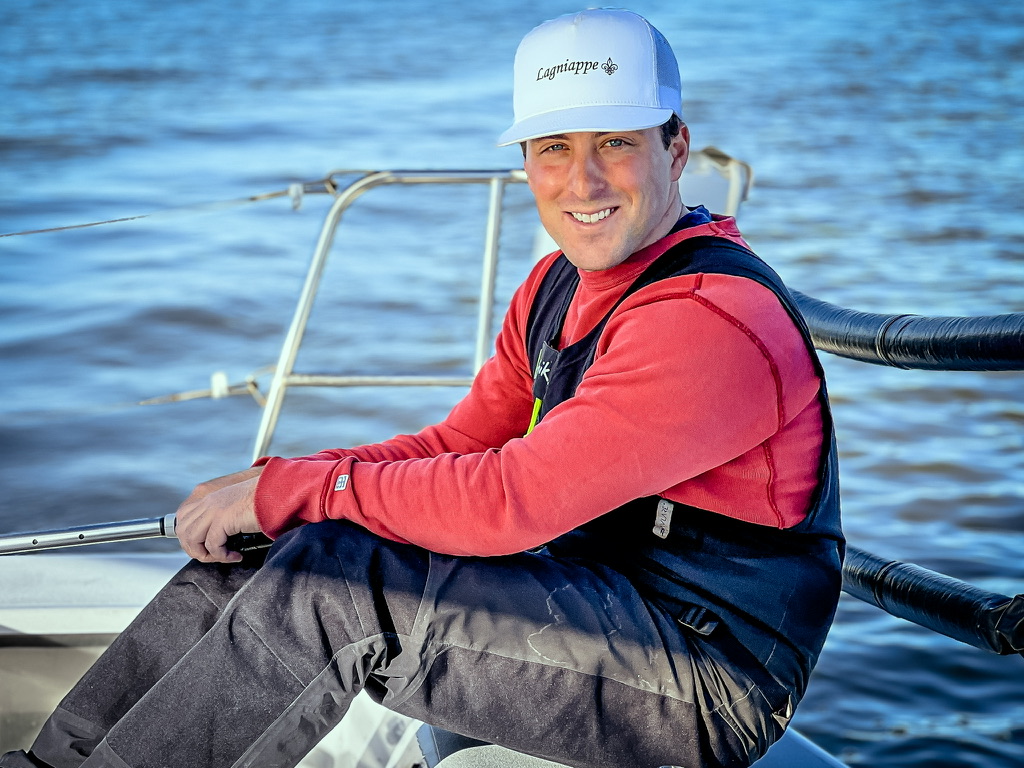
USCG 100-Ton Captain, marine advisor, and America's Cup shore team member (American Magic). Based in Annapolis, sailing the Chesapeake year-round — including, apparently, on the ice.
More about Shane →