A 21-foot carbon ocean racer with a canting keel and water ballast is on her way to Eastport. Here’s what she is, why she’s coming, and what we’re going to do with her.
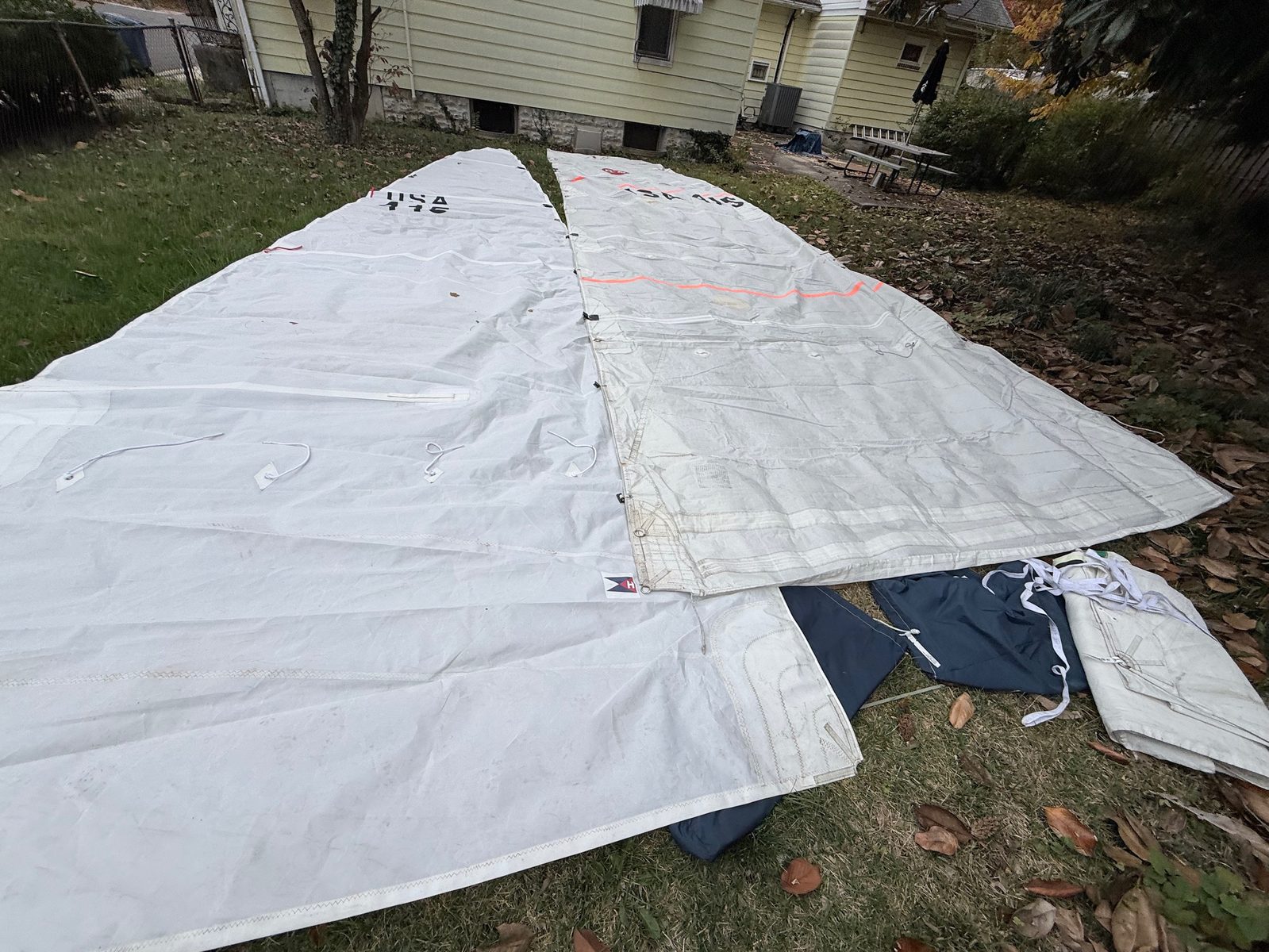
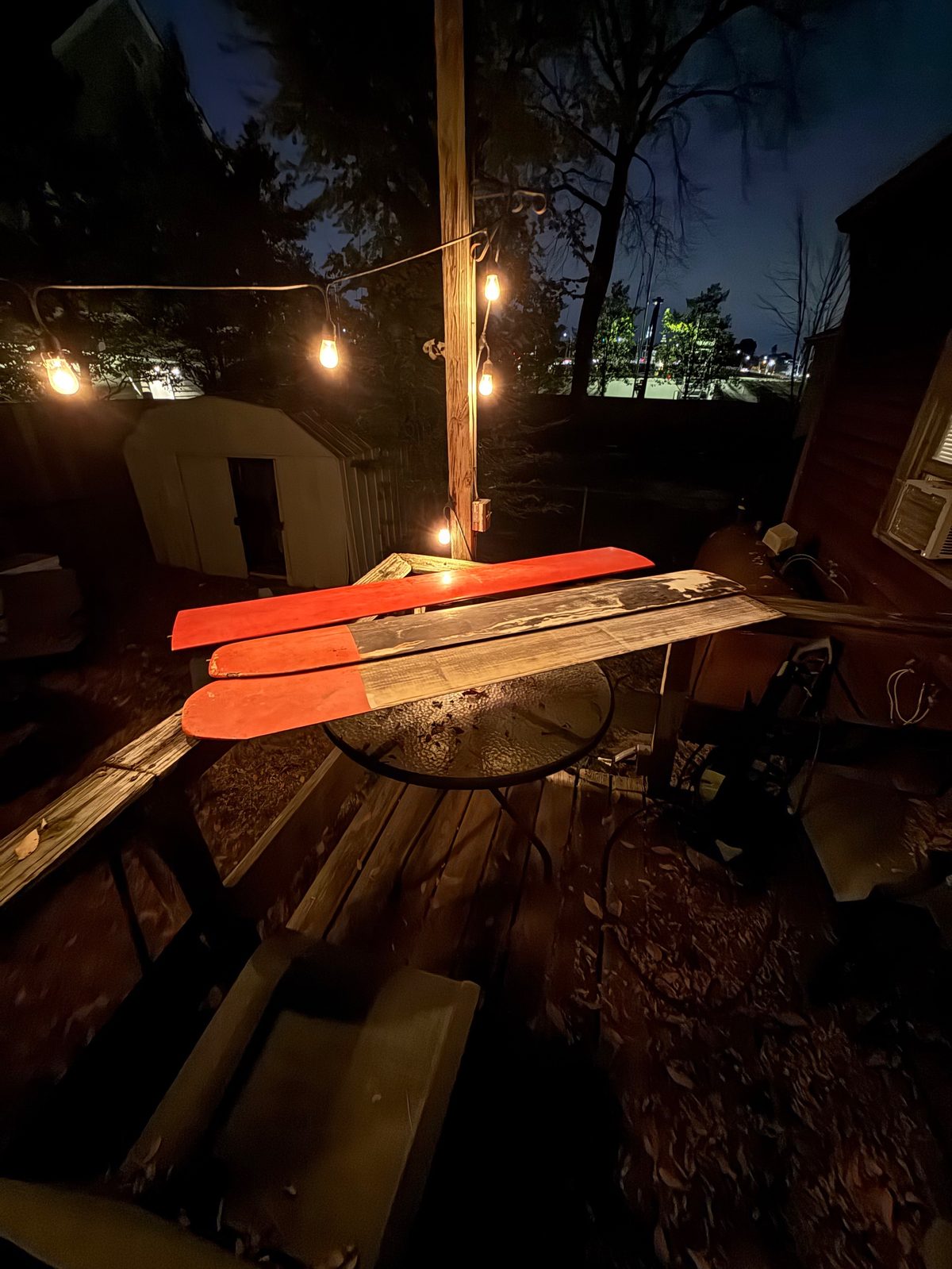
This week my neighbors in Eastport watched me lay a mainsail across the backyard. Then a jib. Then two daggerboards and a pair of rudders the color of traffic cones, propped on the picnic table under the string lights. No boat. Just the parts of one, arriving ahead of her like luggage sent on before a trip.
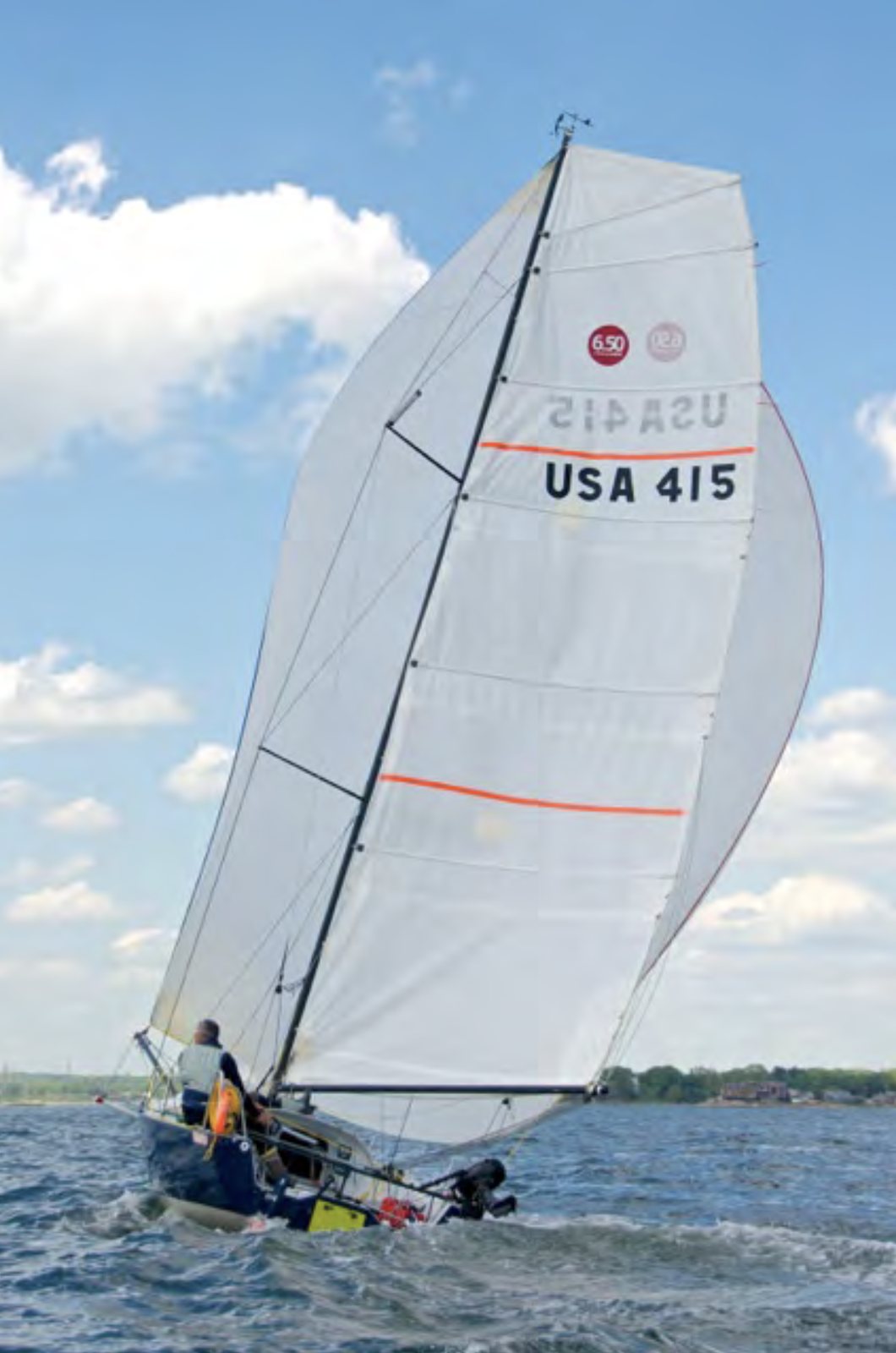
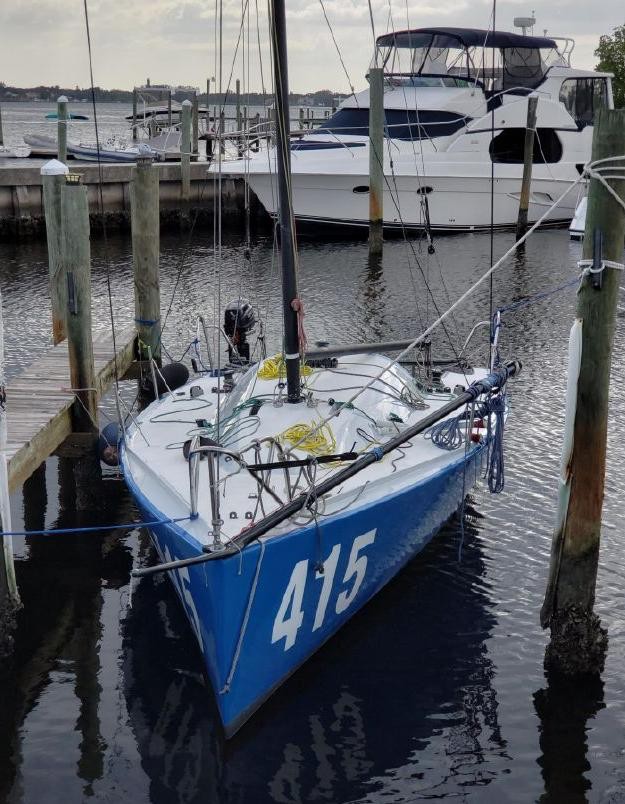
The boat is USA 415, and she lands in Annapolis in the next few days on a trailer. When she’s in the water you’ll know her: dark blue, nine and a half feet wide on a twenty-one-foot hull, a carbon mast that looks too tall for the boat, twin rudders, and a lead bulb hanging off a keel that swings from side to side. People will stop on the dock and ask what she is. The short answer is a Mini 6.50 — a Mini Transat boat — and she’ll be the only one in Annapolis. The long answer is this article.
I’m writing it because the plan for this boat is bigger than one sailor, and because I need help with it. So: what she is, why she’s here, what we’re going to do with her, and how to be part of it.
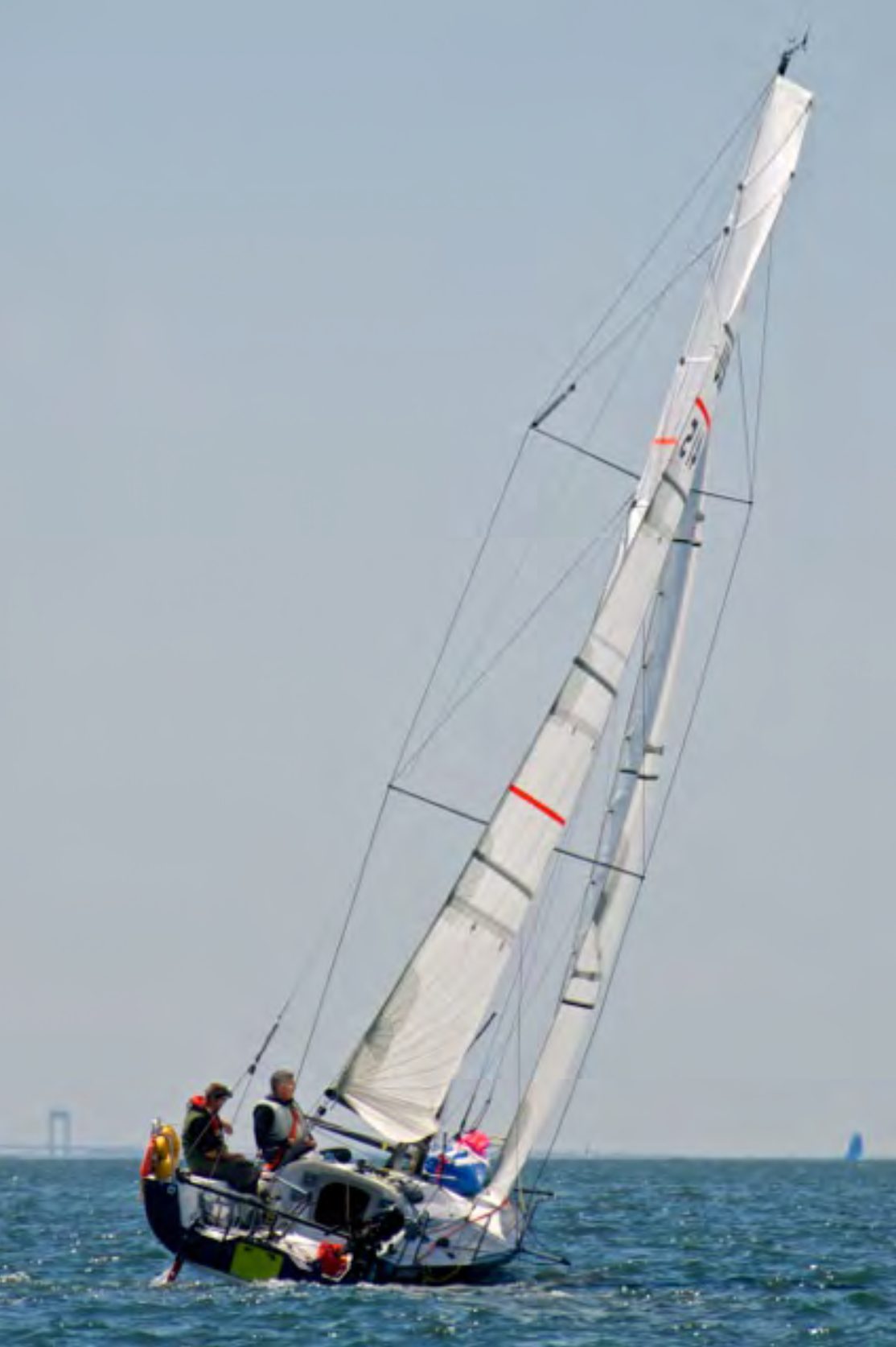
Every two years about ninety sailors leave France alone on boats 6.50 meters long and race 4,050 miles across the Atlantic to the Caribbean. No outside weather routing. No satellite phone. No engine to speak of. That race is the Mini Transat, and the boats built for it are the most radical small sailboats on earth: carbon hulls, keels that cant out to windward, water ballast tanks, daggerboards, masts you’d expect on a thirty-five footer. They were the test bed for almost every idea now on the IMOCA 60s in the Vendée Globe. The foils, the wide sterns, the twin rudders — all of it got tried on Minis first, because a twenty-one-foot boat is cheap enough to get wrong.
The class is also the on-ramp. Nearly every professional offshore sailor in Europe came up through it. You buy an old Mini, you learn to sail it alone, you do the qualifying miles, you race the Transat, and somebody notices. There is a complete pathway from club sailor to ocean racer, and it starts on these boats.
In the United States there isn’t one. There are a handful of Minis in the country — one other on the Chesapeake — almost none racing, and no place to learn to sail one. That’s the gap USA 415 is here to start closing.
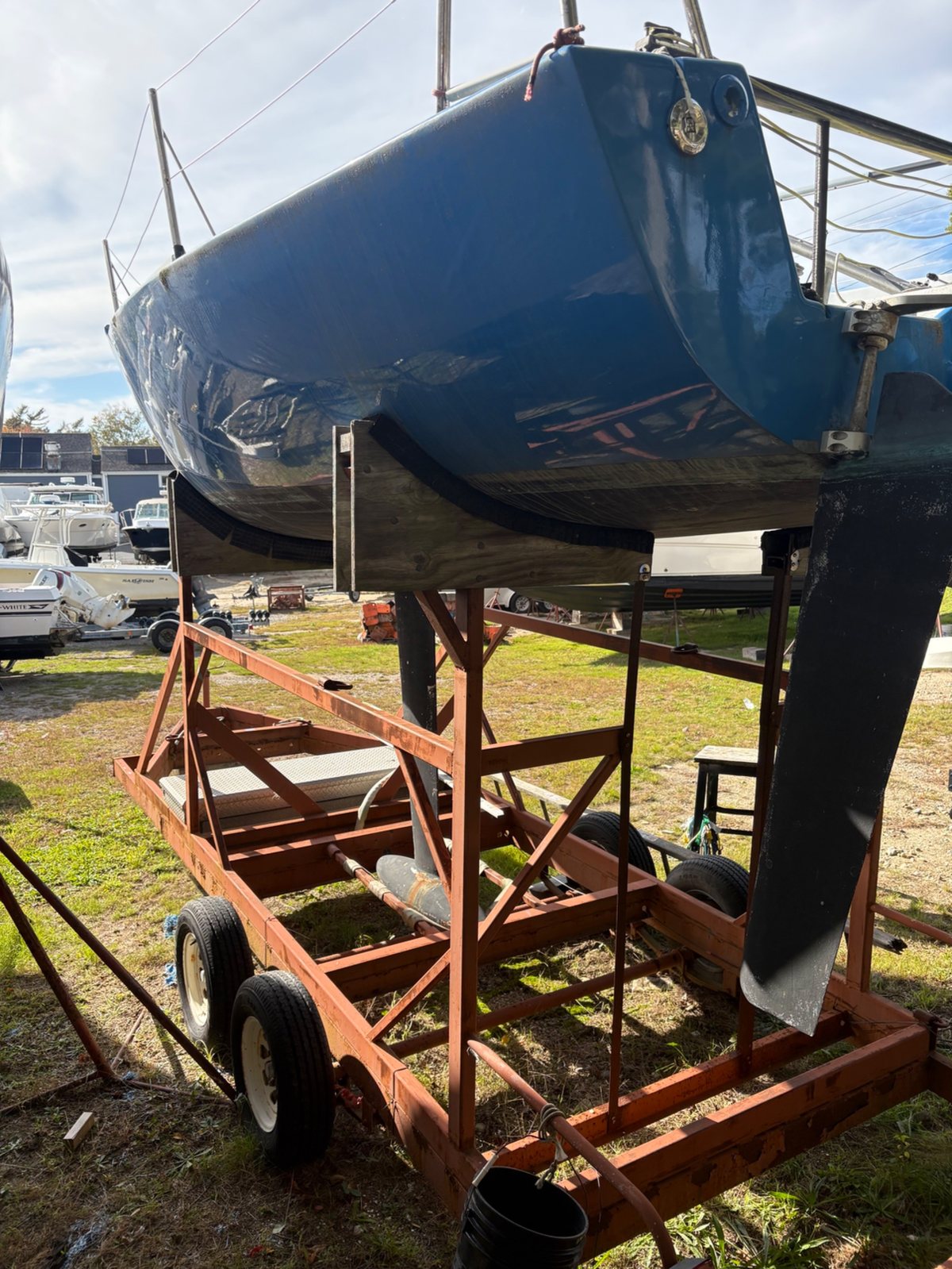
415 is a prototype — a one-off, not a production boat — designed by Berret Racoupeau and built in carbon by M.A.T. Composites in Mattapoisett, Massachusetts in 2003, which makes her one of the few American-built Minis anywhere. She was refit for offshore work with a new carbon mast and new rudders. She was surveyed in October with her mast on a rack and several inches of water in the bilge, and she’s on her way south now.
| Design | Berret Racoupeau Mini 6.50 prototype |
| Built | 2003, M.A.T. Composites, Mattapoisett, MA · carbon fiber |
| Length · Beam · Draft | 21’4” · 9’10” · 6’6” |
| Displacement | About 1,780 lb — the weight of a J/22, carrying the rig of a thirty-footer |
| Appendages | Canting bulb keel, twin daggerboards, twin rudders |
| Ballast | Lead bulb plus water ballast tanks |
| Rig | Carbon mast, masthead asymmetrics on a bowsprit |
| Speed | 25 knots per the builder’s documentation |
| Electronics | NKE autopilot and instruments, B&G, AIS transceiver |
What all of that adds up to: a boat that weighs less than a small car, carries the sail area of a thirty-footer, and uses a swinging keel and a few hundred pounds of water to stand up to it. Off the wind she doesn’t heel and push through the water like a keelboat; she lifts and skips across it. There is nothing else in Annapolis that does that, and nothing else that teaches it.
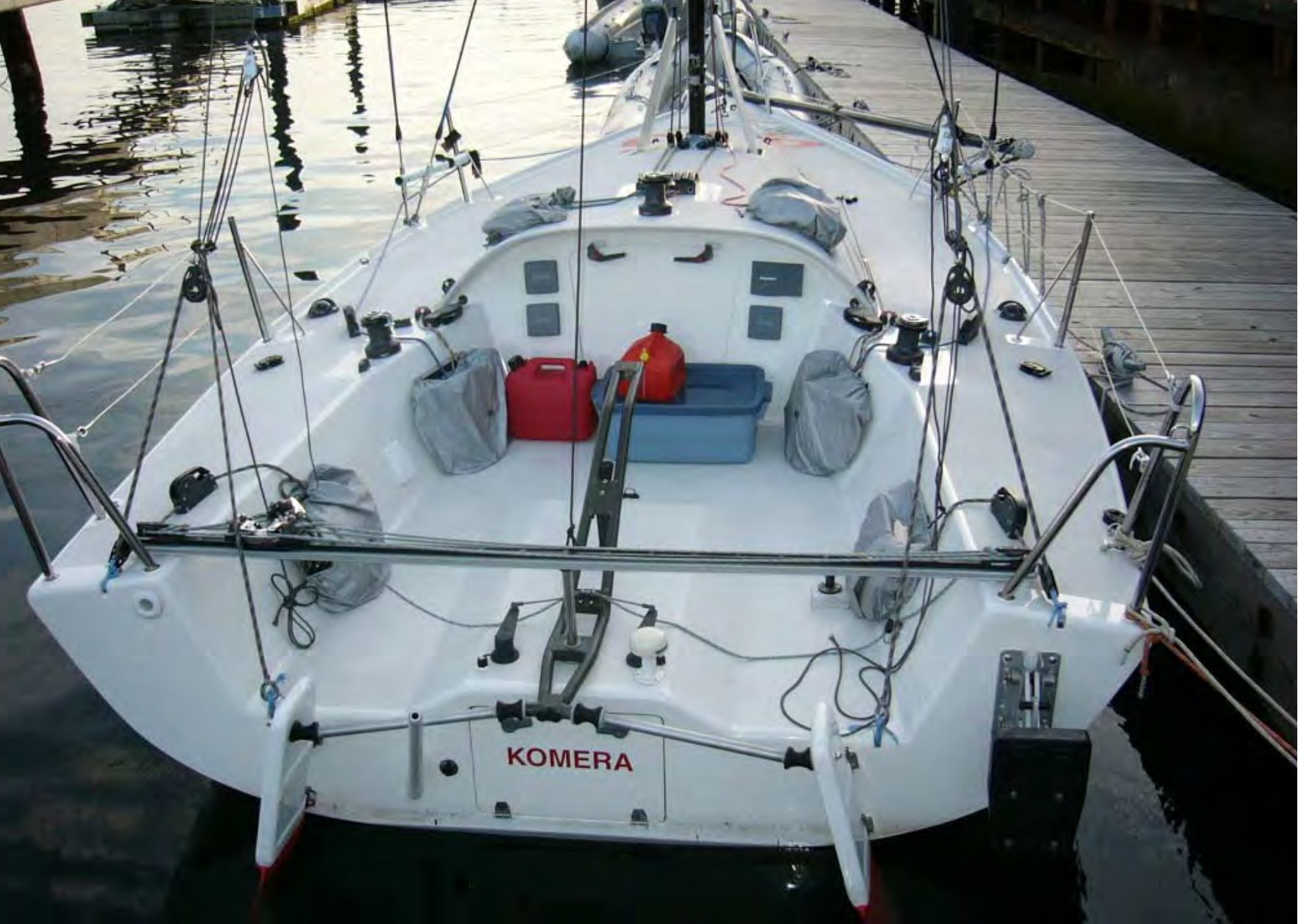
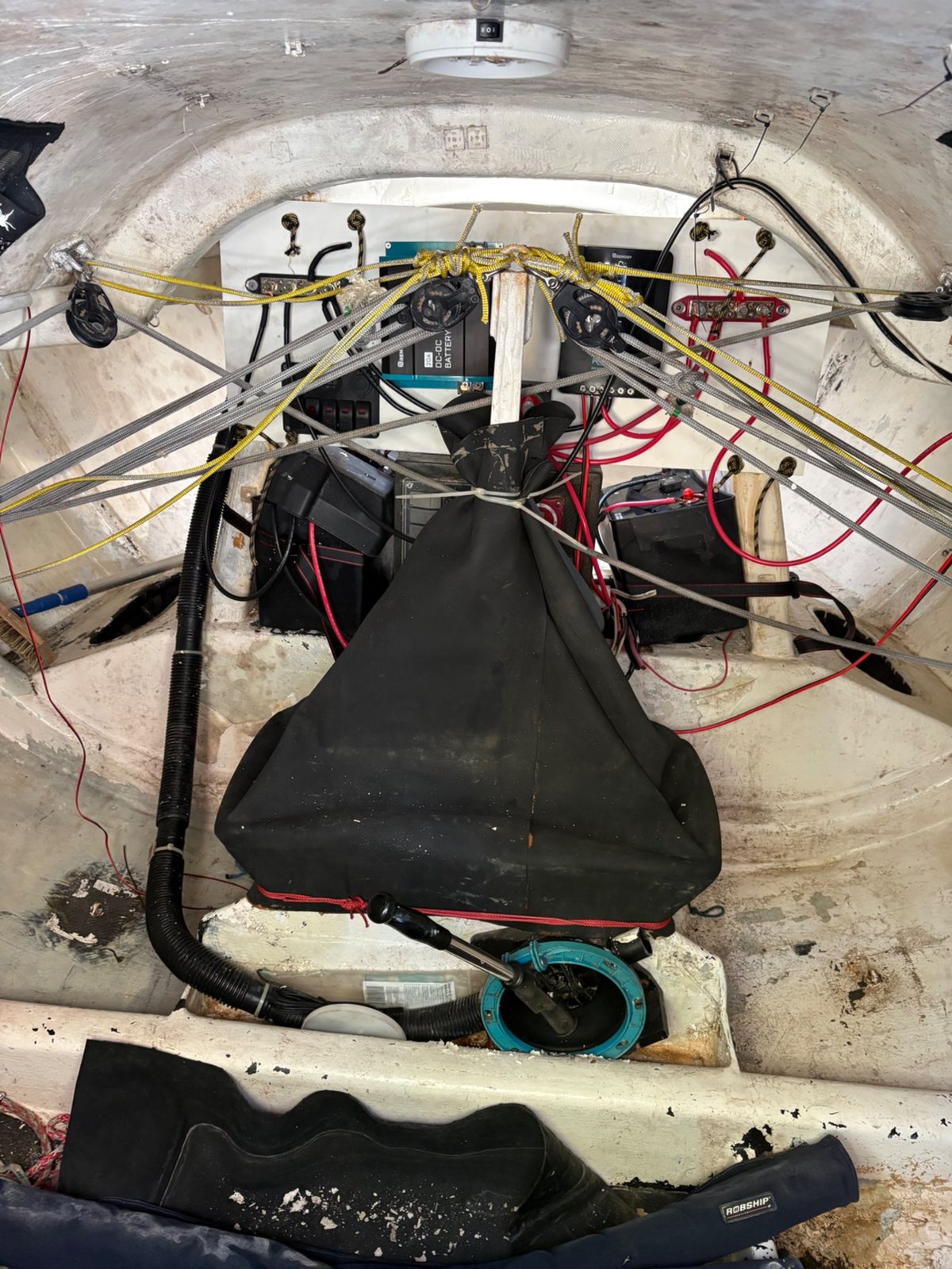
She isn’t arriving turnkey. The gear came ahead of the boat: the sails came out of their bags onto my lawn this week to be measured, inspected and sent to the loft; the daggerboards and rudders are on the back deck under the string lights waiting for fairing and paint; when the hull lands, the keel box, the electrical panel and every block and clutch on deck get the same treatment before she sails hard. There is a list, it is long, and we are going to show all of it.
That’s the series: MINI 415 | The Road to Offshore, on YouTube and Instagram, from refit to sea trials to the first race. The fast days, the broken parts, and the decisions in between. If you’ve ever wondered what it takes to get a boat like this ready for big water, you’ll see it. Get the updates by email →

I didn’t grow up sailing. I grew up in Maryland, nowhere near a yacht club, and I didn’t know sailboat racing existed until I wandered into a club fair at the College of Charleston and signed up on a whim. A coach watched me for about a week, told me to try out for the offshore team, and two weeks later I was racing on one of the best college programs in the country on boats I’d never heard of, with people who’d been doing it since they were seven. I was hooked and I was years behind, and I’ve been catching up ever since.
Since then I’ve worked on the shore team of an America’s Cup campaign, delivered boats up and down the East Coast, won the Annapolis to Newport Race, and spent most Wednesday nights for a decade on the Chesapeake. I hold a USCG 100-ton license. I run Best Boating Annapolis — captain work, deliveries, coaching, boat management, and the J/105 I race every week — and I shoot boats for a living with a drone when I’m not on one.
Here is the thing that bothers me. Everything I just listed I got by luck and by knowing the right people. In this country the road to offshore sailing stops at the dock. You can learn to sail. You can crew on someone’s race boat. You can even do a Bermuda race if you know the right owner. But if you want to learn to sail a modern ocean racer yourself — alone or doublehanded, fast, with the systems the pros use — there is nowhere to go and nobody to teach you. In France a twenty-year-old with a used Mini and a summer of practice has a path. Here, a sailor with the same ambition has a wall. I hit that wall. I want to put a door in it.
USA 415 is the first boat of a program to change that, starting in Annapolis. I’m calling it The Road to Offshore.
Starting in spring 2027, Best Boating will run sessions on 415 for sailors who want to learn performance offshore sailing on the real thing: canting keel and ballast management, daggerboards, autopilot-driven sail trim, sailing shorthanded, and what it actually takes to sail a boat like this fast and safely. Half days and full days, up to four guests, priced per boat, in Chesapeake conditions. Picture it: you, a coach, and twenty-one feet of carbon on a fifteen-knot afternoon off Thomas Point, the keel canted, the ballast tank full, and the boat starting to lift. Details and pricing are on the Mini Transat Experience page.
The goals, and they are goals, not entries: the 2027 Annapolis to Newport Race, doublehanded, for which we’ve asked the organizers for an exception to the length rule. The Bermuda One-Two after that. Coastal records between here and Newport that nobody has set in a boat this size. Every one of those will be filmed and written up here.
One Mini is a curiosity. Four Minis are a class. There are a few more of these boats in the U.S. sitting unsailed, and we’re talking to owners. The end state is a small fleet in Annapolis where a sailor can learn, practice, race locally, and then go offshore — the same ladder Europe has had for forty years, starting on the Chesapeake.
Here’s the honest part. A season on this boat costs real money: dockage, insurance, a proper sail inventory, a hull wrap, regatta entries, travel, and the thousand small carbon things that break on a boat built to be light. Best Boating paid for the launch. To do the rest well we’re looking for founding partners — sponsors, marine-industry suppliers and businesses that want to be in from the start — and we can offer more than a name on the hull: every sail is shot by Drone US Photography, our own production company, so partners get photo and video they can actually use, plus days on the boat for clients and staff as the program grows.
Book a session, or tell us you want to be on the list for spring. Experienced sailors first; if you’ve never raced, start on the J/100 and work up.
Book a session →A title sponsor gets the hull, the sails, the videos and every regatta she enters. Smaller partners get a place on the boat and in the content. Every sail is filmed by our own drone and camera team.
Email about sponsorship →MINI 415 | The Road to Offshore posts every launch, every fast day and every broken part on YouTube and Instagram. Following and sharing is how the next sponsor and the next sailor find us.
Follow the team →And if the Mini isn’t your boat but Annapolis is your water: Best Boating does the ordinary things too. Racing program management and race-day captaining for owners who want to show up and sail. Boat management with a photo report after every visit. Docking and owner lessons on your own boat, sailing charters and lessons on ours, deliveries up and down the coast, repairs and refits at your slip, and free buyer’s representation if the article has you looking for a race boat of your own. Crew Connect if you want to race and don’t have a boat.
If you own a Mini, know of one, have a slip, have Mini sails, or just want to come see the boat — call or text 443-615-4413 or email bestboatingsupplies@gmail.com. She’ll be in Eastport. Come look.
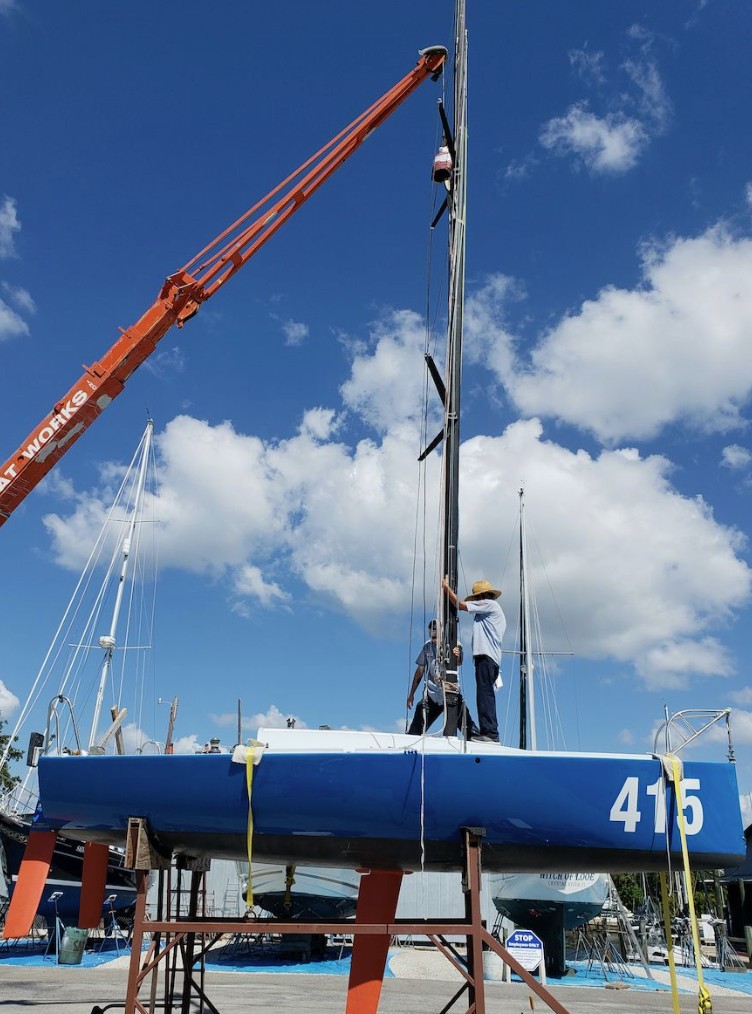
The boat arrives. Unloading, stepping the mast, what we find when we open up the keel box, and the first sail. Posted here, on YouTube and on Instagram.
The Mini Transat Experience Best Boating RacingArrival, first sail, first race, and everything that breaks in between. One email when there’s something worth sending. No spam, unsubscribe any time.
USCG 100-ton Master. College of Charleston offshore team, American Magic shore team, Annapolis to Newport winner. Runs Best Boating Annapolis and sails USA 415.
More about Shane →Questions about the boat, sessions or sponsorship — just call.
443-615-4413Over 200,000 products from top brands. Free shipping on orders over $99.
I help buyers and sellers navigate the boat market with a captain's perspective. Honest valuations, real experience, and deals coordinated through licensed brokerages.
Structured race training with head coach Jahn Tihansky (19 seasons Navy Varsity Offshore, 4 Kennedy Cups). On-water drills, video debrief, Vakaros data. Open to all skill levels.
"Shane was straightforward from day one. He told me my boat was overpriced before I listed it. We adjusted, and it sold in three weeks."
"We'd looked at boats for months without finding the right one. Shane understood what we needed and found it within two weeks."
"His knowledge of systems saved us from buying a boat with serious electrical issues. Worth every penny of the commission."
