Three Feet Above the Harbor
Picture four sailboats on Annapolis harbor. Now lift them three feet into the air. Not the deck — the entire hull. They are skating across the water on what looks, from shore, like nothing at all. The whole boat is suspended in space. The only thing touching the Bay is a thin aluminum strut the size of a kitchen knife, and the wake behind it isn't a wake at all — it's a clean, hissing line. The boats are doing 25 knots. The skippers are leaning the wrong way. And the wind, which is making all of it possible, is also trying to throw everyone off at any second.
That was last weekend. The Helly Hansen Sailing World Regatta. Three days, seventeen races, four WASZP sailors from the U.S. and Canada, and a stiff breeze most of the way through. I race a WASZP — sail number 007, the boat I call Red Rocket — and I finished third on home water. Daniel Draper from Annapolis took second, Ethan Thompson from Canada took the regatta, and Halsey Carter rounded out the fleet, also out of Annapolis. One race win for Red Rocket. A pile of bruises. A weekend I will be thinking about for a while.
What's a WASZP?
If you've never seen one, the WASZP is a single-handed foiling sailboat. Fourteen feet long. Roughly the size of a Laser. One person, one sail, one main sheet. Where it differs from every other dinghy on the harbor is what's underneath. Two aluminum foils — a main foil under the daggerboard and a smaller one on the rudder — that act exactly like airplane wings. Move them through the water fast enough, and they generate lift. Enough lift, and the entire hull rises out of the water until only the foils are submerged. The boat is now flying.
Drag drops by an order of magnitude. Speed jumps. A boat that would top out at six or seven knots in displacement mode is suddenly doing 20-plus on the same wind. We sail upwind at 12 to 15 knots, downwind at 15 to 20, and on a tight reach in big breeze we'll see the mid-twenties without much trouble. With the new high-performance rudder, the class has been clocked at over 30 knots. In a 14-foot boat. With one sail.
And here's the thing nobody tells you when you first see it: the boat heels toward the wind, not away from it. That's not a mistake. That's the whole trick. I'll explain why in a minute — once you understand it, the rest of foiling makes sense.
What This Article Is
This is a story about the regatta — how the three days went, what it actually feels like to start a foiling race, who won and how. But it's also an introduction. A lot of people in Annapolis have seen these boats out there and have no idea what they're looking at. If that's you, keep reading. By the end you'll understand the boat, the class, the racing, and — if you want it — how to get on one yourself this season. Annapolis is the right place. I can put you on the water.
How a Foiling Sailboat Actually Works
The simplest way to understand a hydrofoil is to think of it as an airplane wing turned on its side and dunked underwater. The foil moves through the water, water flows over and under the curved surface, and the pressure difference generates lift — the same way a 737 wing generates lift through air. Move it fast enough, and the lift exceeds the weight of the boat. Once that happens, the hull rises until the foils are the only thing left in the water.
On the WASZP we have two foils doing two jobs. The main foil — mounted on the daggerboard down the center of the boat — provides most of the lift. Both the main foil and the rudder foil are aluminum, which is one of the things that keeps the class accessible compared to higher-end foilers running carbon. The rudder foil at the back provides additional lift and, more importantly, controls pitch. We can manually trim the rudder rake as we sail, adding or subtracting nose-up authority on the fly to get the bow exactly where we want it.
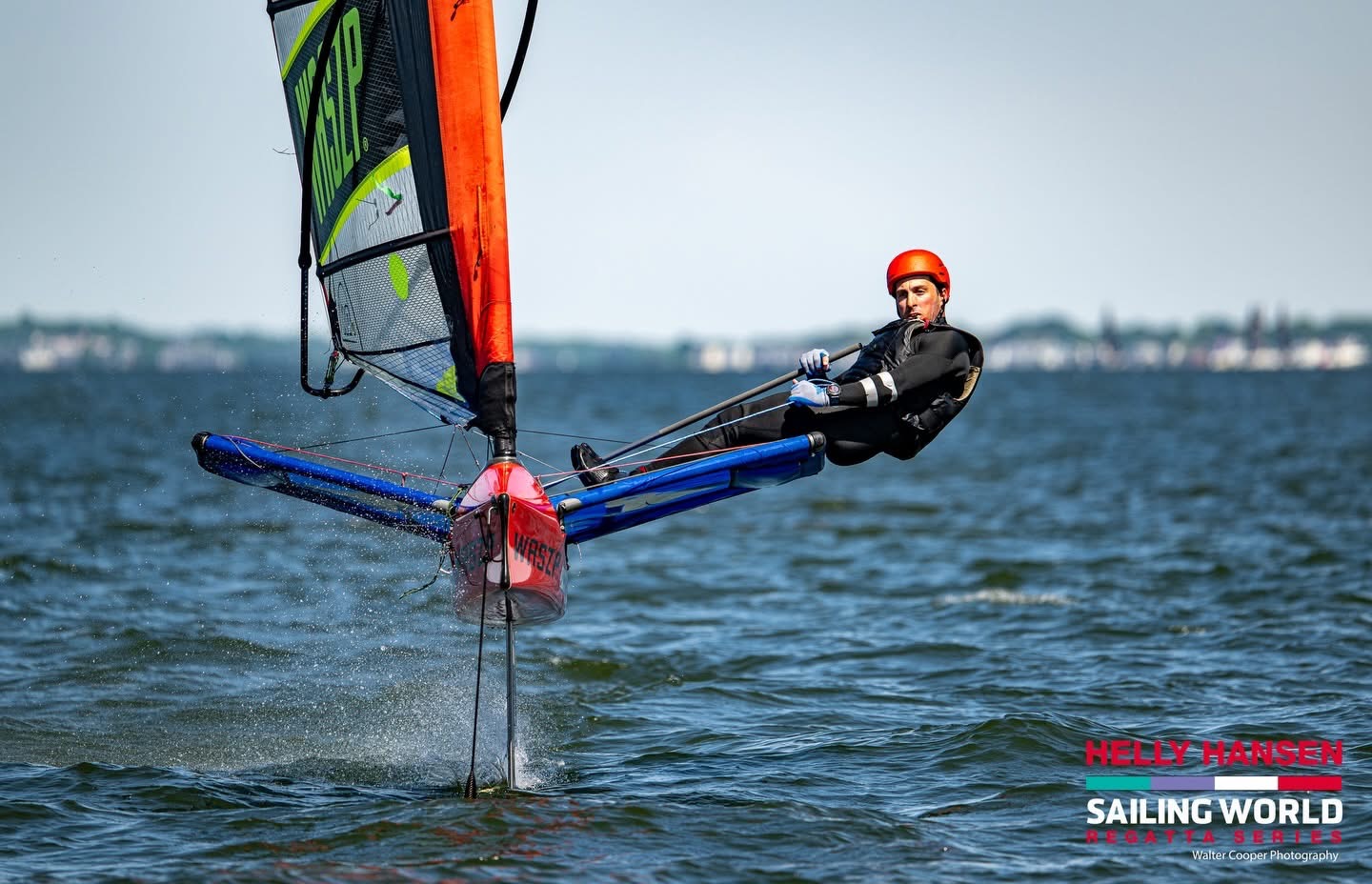
The hard problem with foiling isn't getting the boat to fly. The hard problem is keeping it flying at a constant height above the water without crashing back down or shooting up too high and stalling the foil out of the water entirely. The WASZP solves it with a beautifully simple piece of mechanical engineering: the wand.
The Wand
Off the front of the boat, there's a thin carbon stick that drags along the surface of the water in front of the foil. As the boat rises higher, the wand tips up. As the boat sinks, the wand tips down. The wand is connected via pushrod directly to a flap on the trailing edge of the main foil. When the boat is too low, the flap deflects to add lift. Too high, and the flap retracts to bleed lift off. It's an entirely mechanical autopilot for ride height, running at the speed of light, and it's the reason a relatively new sailor can climb on one of these and have any chance at all.
The whole system is humming away beneath you the entire time you're sailing. You don't think about it consciously. You just feel the boat settle into its groove and lock onto a height — usually two to three feet off the water, with the height climbing as the boat goes faster, right up to the point where the foil starts to ventilate at the surface and you have to back off — and then you focus on everything else.
Sail Controls in Sixty Seconds
One sail. One main sheet. Three sail controls: an outhaul/vang combination on a single line, and a Cunningham. That's it. With those three controls, I can set the sail completely flat — for high-wind, high-speed work where the boat needs to be balanced and easy to manage — or deep and powerful, with bagged-out shape, when the breeze is light and we need to generate every ounce of drive to get up onto the foils in the first place.
Reading the wind, depowering the rig in a gust, powering it back up the second it eases — that's the constant work upwind. Downwind, you're balancing power against control. Too much sail trim and the boat lights up but becomes a handful. Too little and you settle off the foils and the whole boat sinks back into the water. Find the line and stay on it.
Heeling the Wrong Way
Here is the part that breaks people's brains the first time they see it. A normal sailboat heels away from the wind. The wind pushes on the sail, the boat tips to leeward, the keel or hiking crew counter-balance it, and that's how it works. A foiling boat does the opposite. We heel toward the wind. To windward.
Why? Because the foil under the boat is generating massive lift. If the boat heels to leeward like a normal dinghy, that lift vector points sideways — the boat slides off and crashes. If we heel the boat to windward, the lift vector points up and slightly into the wind, which keeps the foil planted, the boat stable, and the rig vertical relative to the sail's load. Counterintuitively, when you heel to windward at speed, the boat becomes weightless. The lift is supporting your body. The hiking effort drops to almost nothing. And the righting moment from a windward-heeled rig means the boat can sail upwind and absorb power in a way no conventional dinghy can match.
This is the single biggest mental shift between sailing a regular boat and sailing a foiler. Everything you've ever learned about how a sailboat is supposed to feel under you is now backwards. Most people take a season to truly get comfortable with it. The first time you nail it — boat heeled to windward, foils locked, sheet eased a hair, hull weightless, water hissing away three feet below you — you understand why people get hooked on this class.
The Race Course
The WASZP race format borrows heavily from SailGP and the America's Cup. Forget what you know about windward-leeward courses with five-minute starts and conservative pre-starts. Foiling races start on a beam reach. All four boats line up perpendicular to the wind, sailing across the start line at full speed when the gun goes off. From a distance it looks like four arrows about to be fired across the harbor.
From the start, we reach to the first turning mark, then bear away around it and head downwind to a leeward gate. Round the gate, head back upwind to that same turning mark, round it the other direction, and reach across the finish line. The whole thing takes ten to twenty-five minutes. No long beats. No conservative tactics. Pure speed, pure positioning, and one bad maneuver can drop you a whole leg.
Day One: Twelve to Twenty-Five
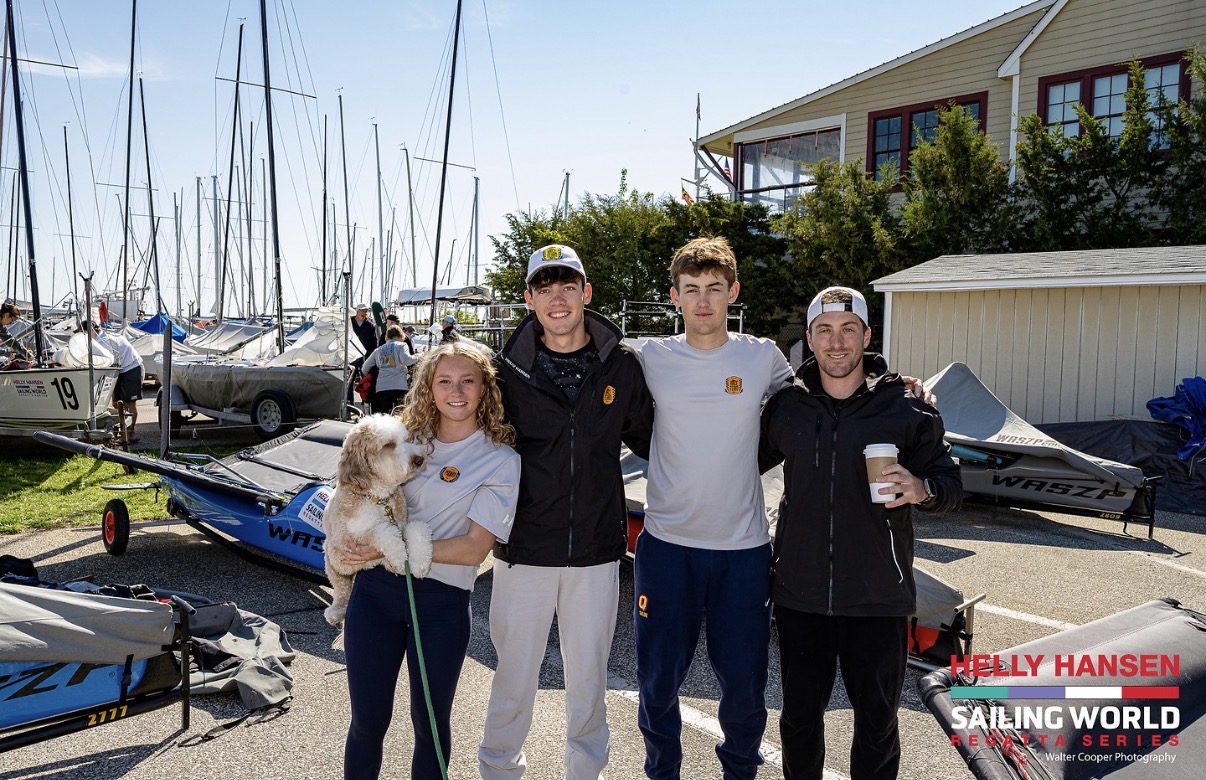
Friday gave us 12 to 25 knots and nine races. That is a lot of sailing on a foiler. The first half of the day was champagne — steady breeze in the high teens, all four boats hooked up and trading places at every mark. By the late afternoon the breeze had built and gone shifty, and the last race got sporty. Boats getting launched off the back of waves. Skippers ejecting. Real speed and real consequences. We came off the water tired, salt-cracked, and grinning. Nine races on day one is the kind of opening that announces a serious regatta.
Day Two: Conditions You Pray For
Saturday was the day. Ten to twenty knots, mostly steady, four races. This is the conditions window where the WASZP feels like it was engineered specifically for the breeze you're sailing in. The boats are powered up but manageable. The starts get tactical. The fleet stays close together through the marks, and small mistakes get punished without anyone getting launched into the harbor. Red Rocket sailed cleanly, and this was the day I posted the bullet.
Day Three: Ten to Thirty
Sunday handed us a different kind of day — ten knots one minute, thirty the next, with the breeze rotating through 30 degrees on the puffs. Four races in conditions where every leg is its own problem. You'd round the windward mark in fifteen knots, bear away, and a wall of breeze would hit you halfway down the run and put you on the edge of control. You're constantly playing the wand against the gust, easing the main, balancing the boat to windward as the load tries to throw you the other way. By the end of Sunday everyone was wrung out. Seventeen races in three days. That's a regatta.
What it's like in your hands: A puff hits at 25 knots. The boat surges forward instantly — no acceleration curve, just now. Your job, in the next two seconds, is to ease the main exactly enough to keep the rig vertical, shift your weight a hair to windward to keep the boat heeled the right way, feel the wand reach for more lift, and steer through the gust without burying the bow. Everything happens at once. Twenty minutes of that is a workout. Three days of it is a regatta.
The Final Standings
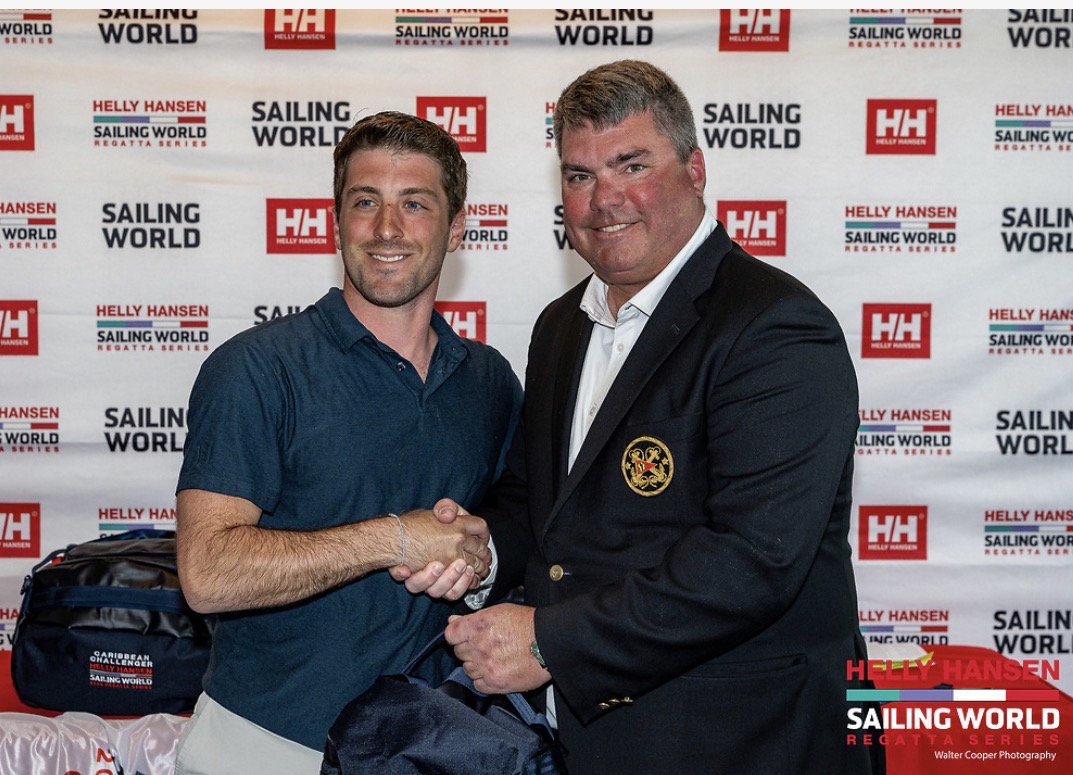
Ethan Thompson out of Canada took the win. Clean racing, smart decisions, well-deserved. Daniel Draper, an Annapolis local, finished second after a strong consistent series — he's been sailing the class hard and it showed. I finished third with one race win and a handful of close finishes that didn't quite go my way. Halsey Carter, also from Annapolis, finished fourth.
The story of the regatta from a fleet perspective is the strength of the Annapolis WASZPs. Three of the four boats called this harbor home. The class is alive here. There's room for it to grow.
Red Rocket
007 is one of the older hulls in the class — an early-generation WASZP, well-used by the time I got my hands on her. Most of the boat has been rebuilt at this point. New foils. Refurbished rig. Reworked control systems. New wand mechanism. The cockpit hardware has been replaced. The bow has been repaired. Keeping a boat this old foiling at the front of the fleet is a full-time job in itself, and I do most of it myself in the off-season.
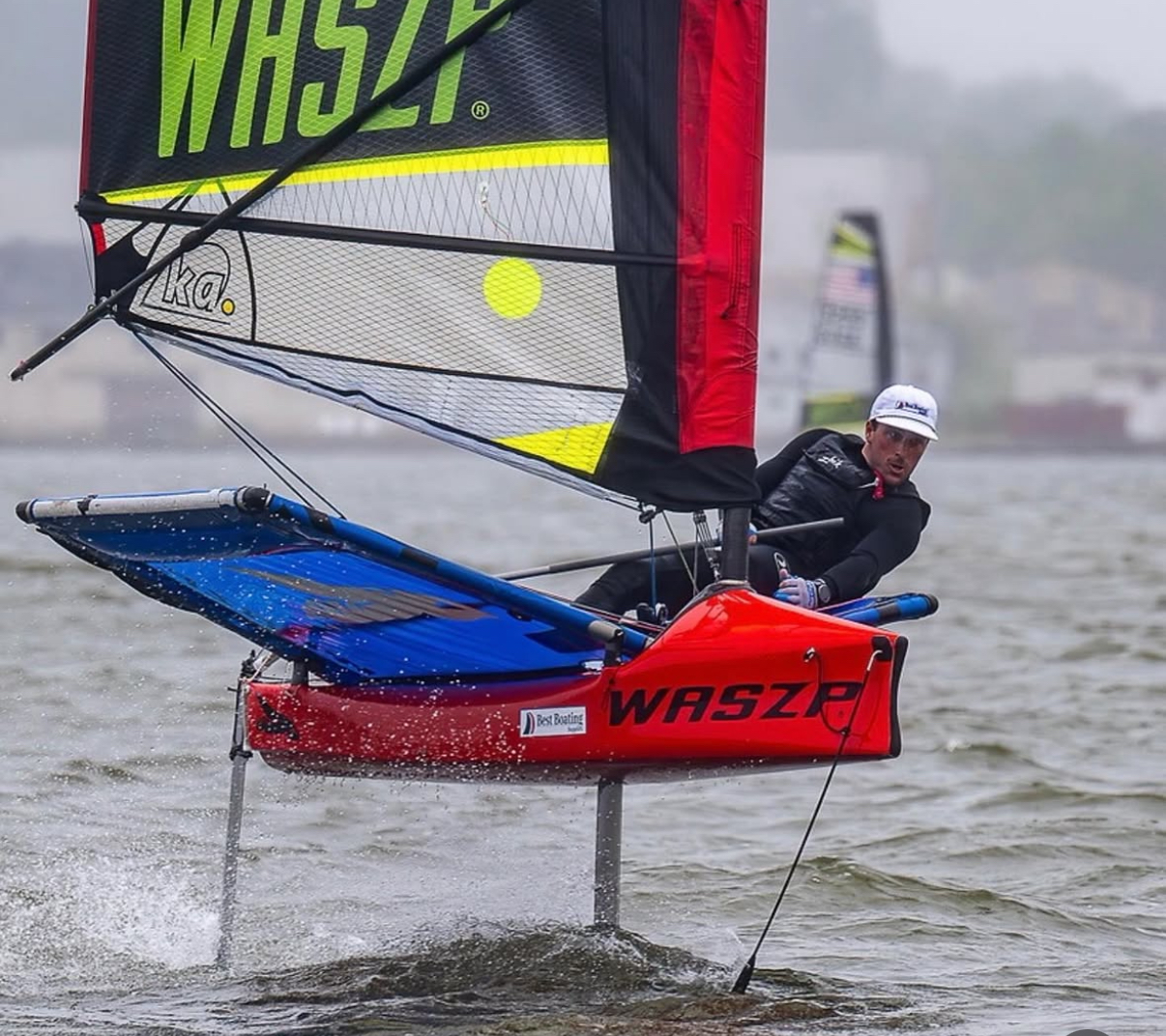
Foilers are unforgiving on equipment. Twenty-five knots of boat speed plus salt water plus aggressive racing equals constant wear. Bushings wear out. Pushrods need adjustment. Foil edges need attention after every couple of regattas. The wand mechanism in particular is precise — a hundredth of an inch of slop in the linkage and the boat won't fly cleanly. There's a reason the people at the top of the class are also the people who can rebuild their own boats from the rudder up.
That's where my day job and my hobby start to look like the same thing.
What I Actually Do for a Living
Best Boating Annapolis is my business. Same captain, same hands, same approach — just applied to other people's boats instead of mine. The skill set that keeps Red Rocket flying is the skill set I bring to clients across the harbor.
Captain services. If you have a boat and you need someone to drive it — for a charter, a delivery, a sea trial, owner training, or just a peaceful afternoon when you'd rather be a passenger — I'm a USCG 100-ton Master and I do this every week.
Boat maintenance and management. Mobile marine work, seasonal management, regular cleanings, systems checks, and the kind of constant attention every well-kept boat needs to stay sailing well. The same eye I bring to my foiler I bring to a 40-foot cruiser.
Race team support and coaching. If you have a race program and you need a coach, a tactician, a boat captain, or someone to manage your campaign end-to-end — from regatta logistics to crew rosters to tuning — I do all of it. I came up in collegiate offshore racing at the College of Charleston and I've been racing in Annapolis ever since.
Charters and photography. Private day sails on the Bay. Drone photo and video for boat owners, brokers, and regattas. Two of the things I love most, made into services.
Every one of those services exists because I do them on my own boat already. Hiring me is hiring someone who lives this work, not someone who reads about it.
Want to Try Foiling?
Here's the part most people don't expect. You don't have to own a WASZP to sail one. You don't even have to be an experienced sailor.
If you've read this far and you're curious — if you've ever watched these boats fly across the harbor and wondered what it would feel like to be the person up there — reach out. Through Best Boating Annapolis I can put you on a foiler. I can take you out on Red Rocket myself, walk you through the systems, and on the right day get you flying with me. If you'd rather start a step back, I can put you on a more forgiving boat first — or get you crewing on a Wednesday-night keelboat to build the fundamentals before you hop on a foiler.
This is the thing nobody talks about with foiling: it looks impossibly elite, but the class is genuinely friendly, the boats are accessible, and Annapolis has the breeze, the water, and the fleet to support new sailors getting into it. If you want to learn, there's a path.
Crew Connect: The Easier On-Ramp
Maybe foiling at twenty-five knots isn't where you want to start. Fair. The other answer is Crew Connect.
Crew Connect is a program I built to match sailors — including total beginners — with race boats in Annapolis. Wednesday-night beer-can racing, weekend regattas, crew positions on bigger keelboats. Owners need crew. People want to learn. I personally do the matching, get people on the right boats, and follow through to make sure it works. It's the most direct way to go from never having raced a sailboat to actually being part of a crew on the water by the end of the month.
It's also the natural feeder into bigger things. Sail enough Wednesday nights and the foiling boats stop looking impossible. They start looking like the next step.
Get on the Water This Season
Whether you want to try a foiler or learn to race on a keelboat, there's a way in. Send a note or call.
Try Foiling or Join Crew Connect → Call 443-615-4413 →One More Picture
End of day three. Sunday evening. The breeze finally laying down, the four boats coming off the foils one by one and settling back into the water. You can hear it — the hiss of the foils gives way to the ordinary slap of a hull, and the boats slow from 20 knots to a walking pace in about three seconds. The harbor goes quiet. Halyards rattle. The committee boat breaks down the marks. Somebody's already telling a story about a near-capsize on the second beat. The sun is sliding behind the western shore. We sail in.
Annapolis is the place. The class is here. Three of the top four boats at this regatta call this harbor home, and there's room for more. If you've been watching from the seawall and wondering what it would take to be the one out there — this is your invitation.
Call me. 443-615-4413. Or send a message through the site. I'll get you on the water.
About Best Boating Annapolis
Best Boating Annapolis is a full-service boating operation run by Captain Shane Kilberg — USCG 100-ton Master, based in Annapolis. I sell boats, help people buy the right one, run private charters on the Chesapeake, shoot professional drone photography for yachts and regattas, handle mobile marine repair, and offer captain services for deliveries, training, and sea trials. The racing program, J/105 clinics, and Crew Connect are the newest pieces — built to grow the racing community and get more people on the water. One captain, every service. If it involves a boat in Annapolis, I can help.
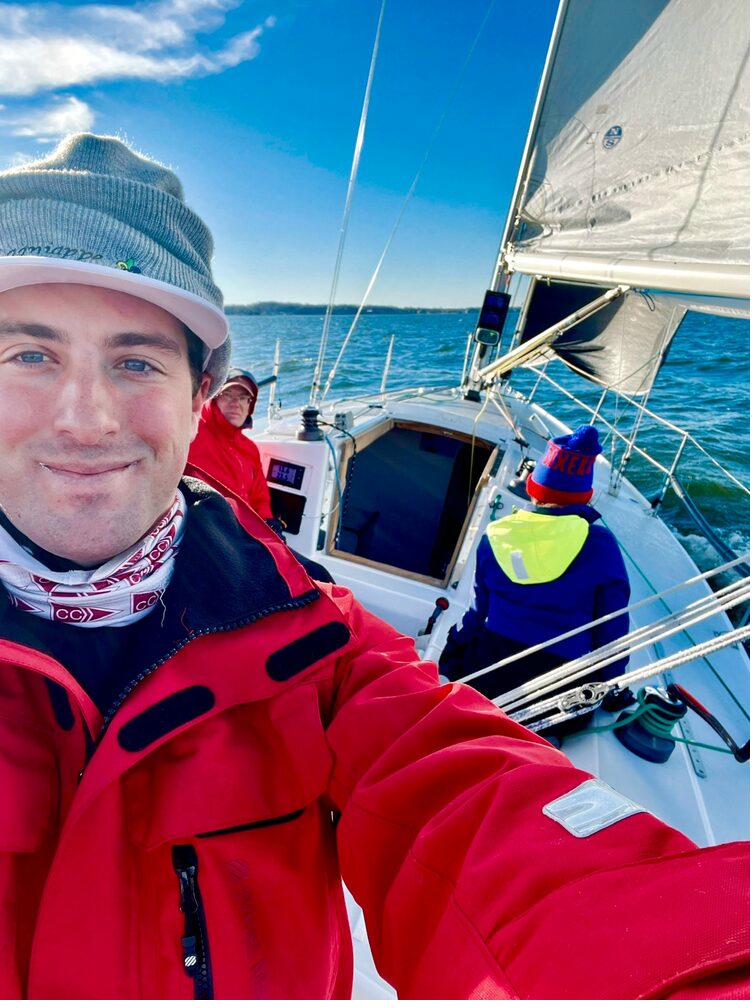
Captain Shane Kilberg
USCG 100-ton Master Captain. Sailing coach, foiler, and the person who answers the phone at Best Boating Annapolis. College of Charleston offshore sailing program.
More about Shane →